Where the power comes from
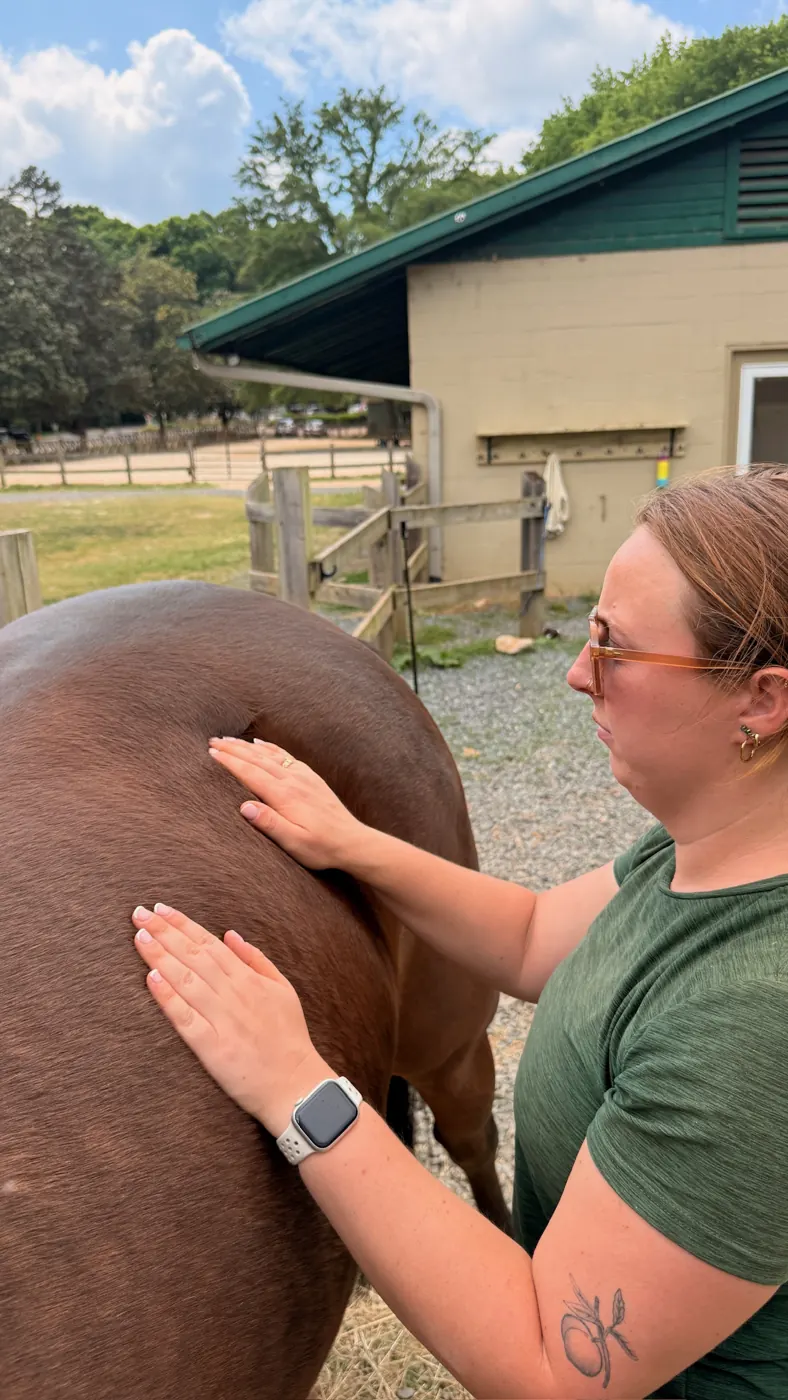
Your horse's hind end is its engine. The front limbs support the horse's weight, but it is the hind end that powers the body forward: from the hoof to the hock, the hip to the stifle, and all of the muscles in between.
All of that power travels through one small area on its way into the rest of the body: the lumbosacral junction, where the last lumbar vertebra meets the sacrum, just in front of the croup.
Why one joint matters so much
The lumbosacral junction is one of the most flexible points in the horse's spine. When it flexes, the hind legs can step deep underneath the body. That reach, usually called tracking up, decides how much power is in each stride.
If the area is restricted, the hind step gets shorter. The horse can't load the hocks to spring into a jump or sit back for a quick turn. And because it can't engage its core, it makes up for it elsewhere: a higher head and neck, a hollow back, and bracing through the shoulders.
Pelvic balance
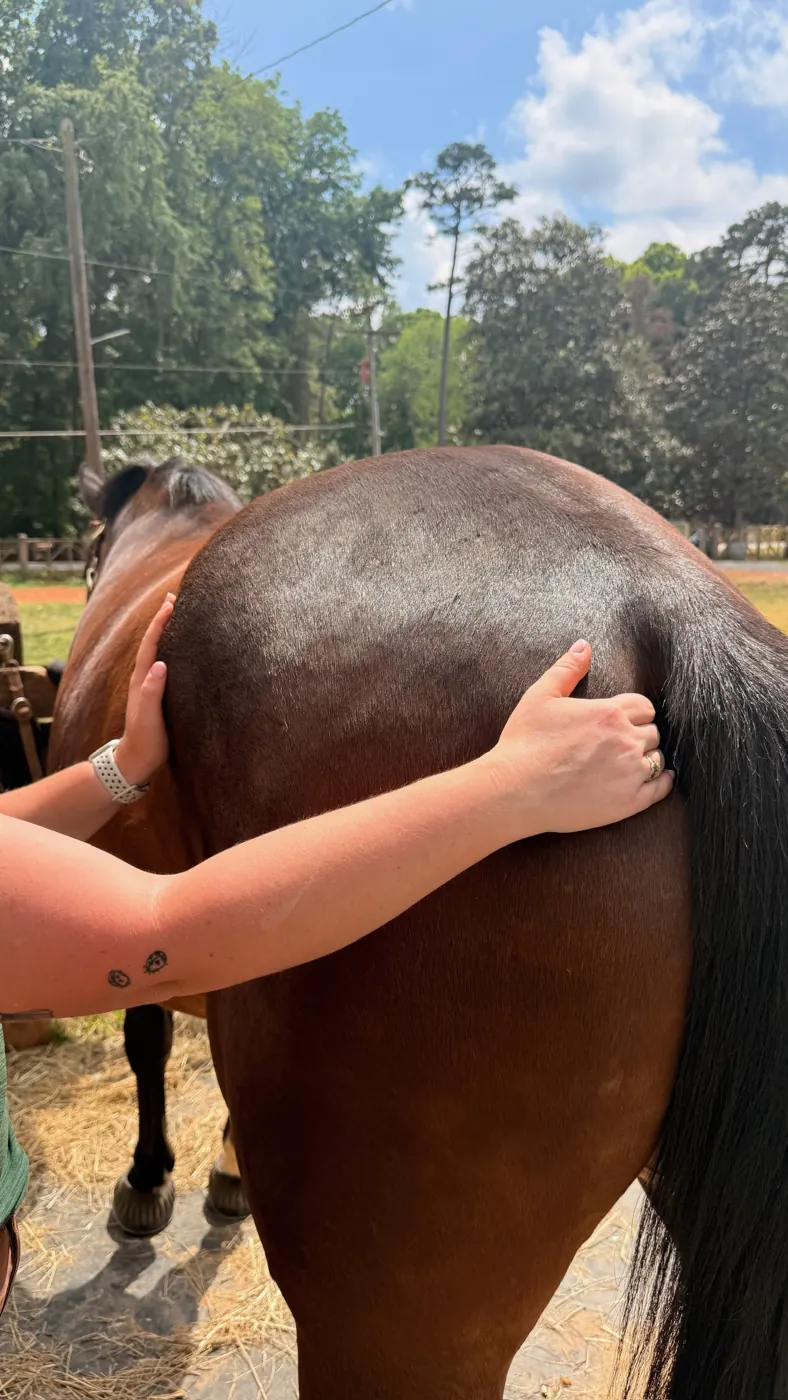
The pelvis is the bridge between the hind legs and the spine. A horse moves best when it moves evenly. When the pelvis is out of balance, force spreads unevenly through the body, and the lower back tightens up trying to stabilize it.
From the saddle, that can feel like:
- A shorter stride with one hind leg, or dragging a toe
- Trouble with upward transitions
- Resistance in lateral work, especially crossing under
- Not wanting to hold up a hind foot for picking or the farrier
Over time the compensation spreads: bracing in the neck, uneven muscle from one side to the other, and a topline that won't build no matter how much work you put in.
The muscles that do the work
Two muscles act as a pair here. The gluteus medius sits on top of the pelvis and extends the hip; it is the largest muscle in the horse and the main source of push. The psoas sits underneath and flexes the hip while stabilizing the whole region. When the two work together with a balanced pelvis, the horse can track up and use its core. When either one is tight or guarded, the whole chain suffers.
Where bodywork fits
A lot of my work happens through this area: releasing the glutes, the long back muscles, the hamstrings, and the fascia that ties them together, so the lumbosacral joint can move the way it should. I'll also be honest when what I'm feeling is beyond tight muscle. Lameness, sudden changes, or anything that looks like a joint or bone problem belongs with your vet first.
Sources: Biomechanics and Physical Training of the Horse (Jean-Marie Denoix), Equine Science (Zoe Davies), How Your Horse Moves (Gillian Higgins), and my Freely Forward Bodywork certification coursework.
Questions about your horse?
Tell me what you're noticing and I'll call or text within 24 hours.
Get in Touch