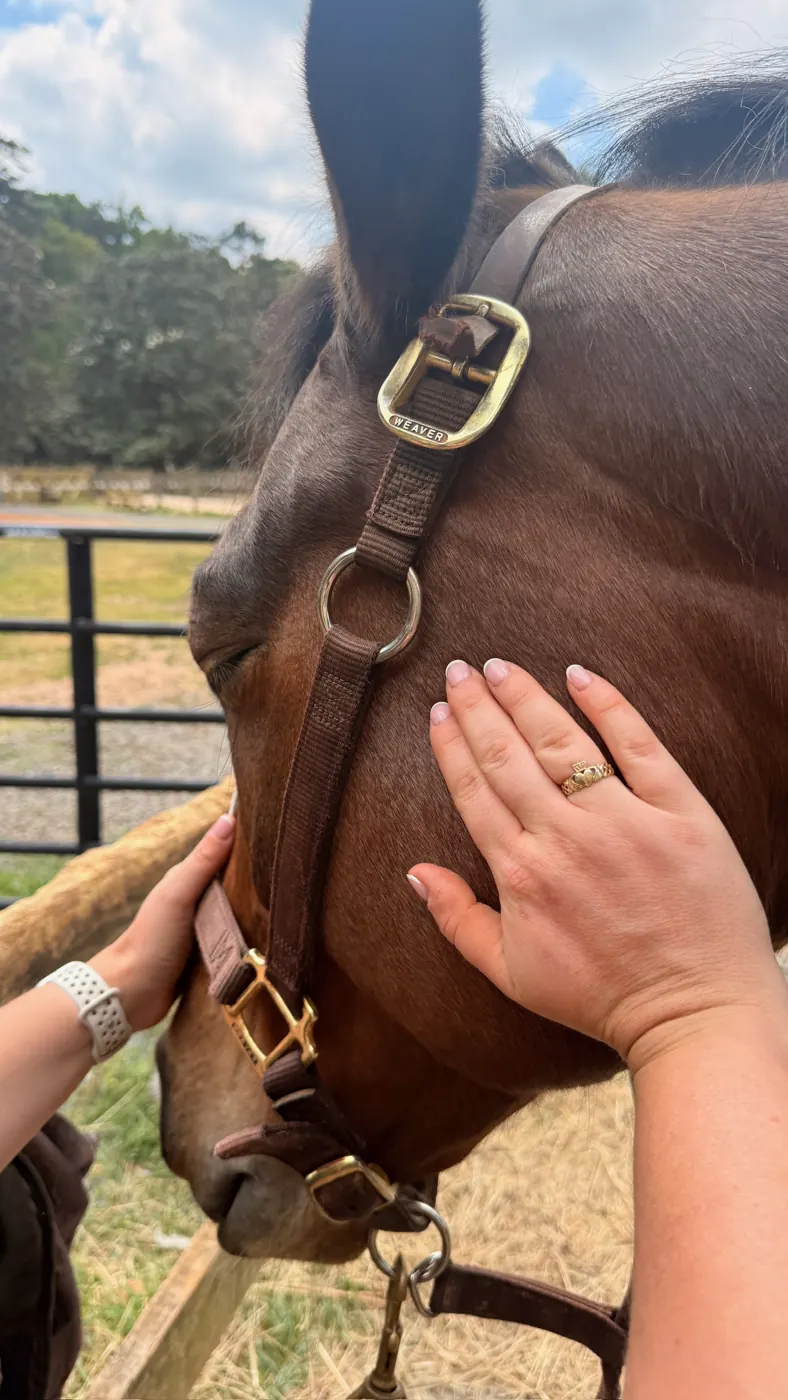
The pivot behind the ears
The first vertebra in the neck, the atlas, is a pivot joint. It's what lets your horse turn its head, whether that's to graze, to check on a herd mate, or to soften and bend to the bit. Small muscles right behind the ears control that movement: one group tips the nose in, another lifts and rotates the head.
When that area is tight, it shows up under saddle as trouble bending, trouble accepting the bit, and trouble with connection.
The bigger muscles on top
Several larger neck muscles also attach up here, and they act as bridges. Tension at the top of the neck travels down into the shoulder, and tension in the shoulder travels up.
- Splenius. Lifts the head and bends the neck to the side. It attaches to the wing of the atlas, so a tight splenius often means a sore poll and a stiff top of the neck. Horses that brace through the neck build tension here, and it's often uneven left to right. Research on this muscle found it's around 40 percent fast-twitch fibers, which helps explain why it tires, and why a tired neck can turn into heavy contact and lost self-carriage.
- Brachiocephalicus. Runs from the head and neck all the way to the front leg. It's often overdeveloped or tight in horses held in a forced headset or ridden with heavy hands, and because it's tied to the leg, it can shorten the front stride and limit bending.
- The nuchal ligament. Not a muscle, but a long elastic cord from the poll to the withers that helps hold the head and neck up without effort. Many of the neck muscles attach to it, so when it isn't doing its job, they work harder.
The jaw
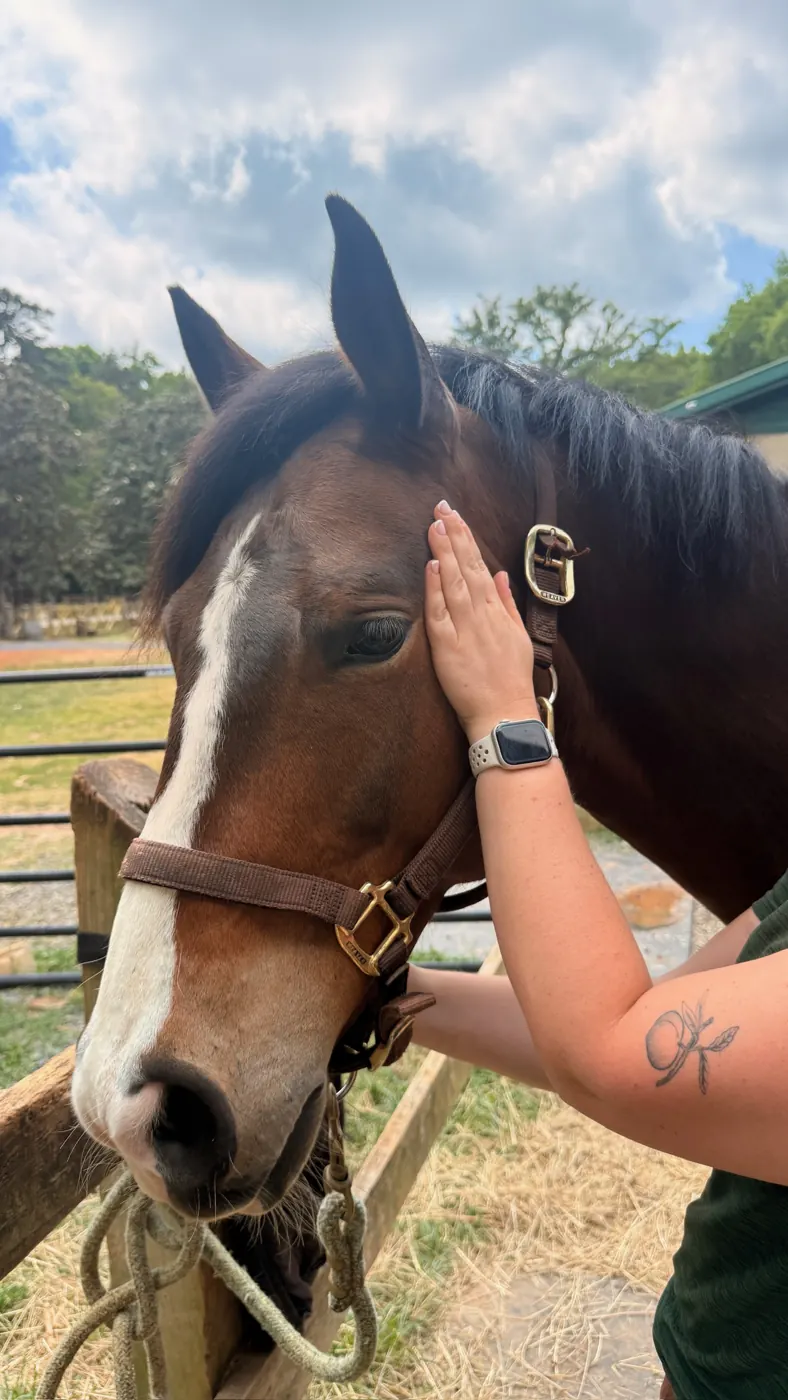
The masseter, the big chewing muscle on the side of the face, is the most powerful muscle in the head. It's closely tied to the TMJ, the jaw joint. It often gets tense in horses that crib or grind their teeth, and in horses ridden in a bit that doesn't suit them or by a heavy hand.
Signs to watch for: head shyness, avoiding the bit, grinding teeth, and in bigger cases, chewing hay or grain slowly or awkwardly.
What you might feel
- Going behind the vertical, or curling to avoid the contact
- Fussing with the bit, gaping, or sticking the tongue out
- Stiff to one side, or bending more easily one way
- Heavy in the hand, or losing self-carriage as the ride goes on
- Head shy when bridling or touching the ears
When it's not just muscle
Teeth, bit fit, and bridle fit can all cause the same signs, and so can things that need a vet's eye. If your horse is fussy in the mouth, a dental check is a good first step. I'll always tell you if what I'm feeling looks like it belongs with your vet or dentist instead of me.
Sources: ABC of the Horse Atlas (P. Gronberg), How Your Horse Moves (Gillian Higgins), Gellman et al. (2001), "Morphology, Histochemistry, and Function of Epaxial Cervical Musculature in the Horse," Journal of Morphology, and my Freely Forward Bodywork certification coursework.
Questions about your horse?
Tell me what you're noticing and I'll call or text within 24 hours.
Get in Touch