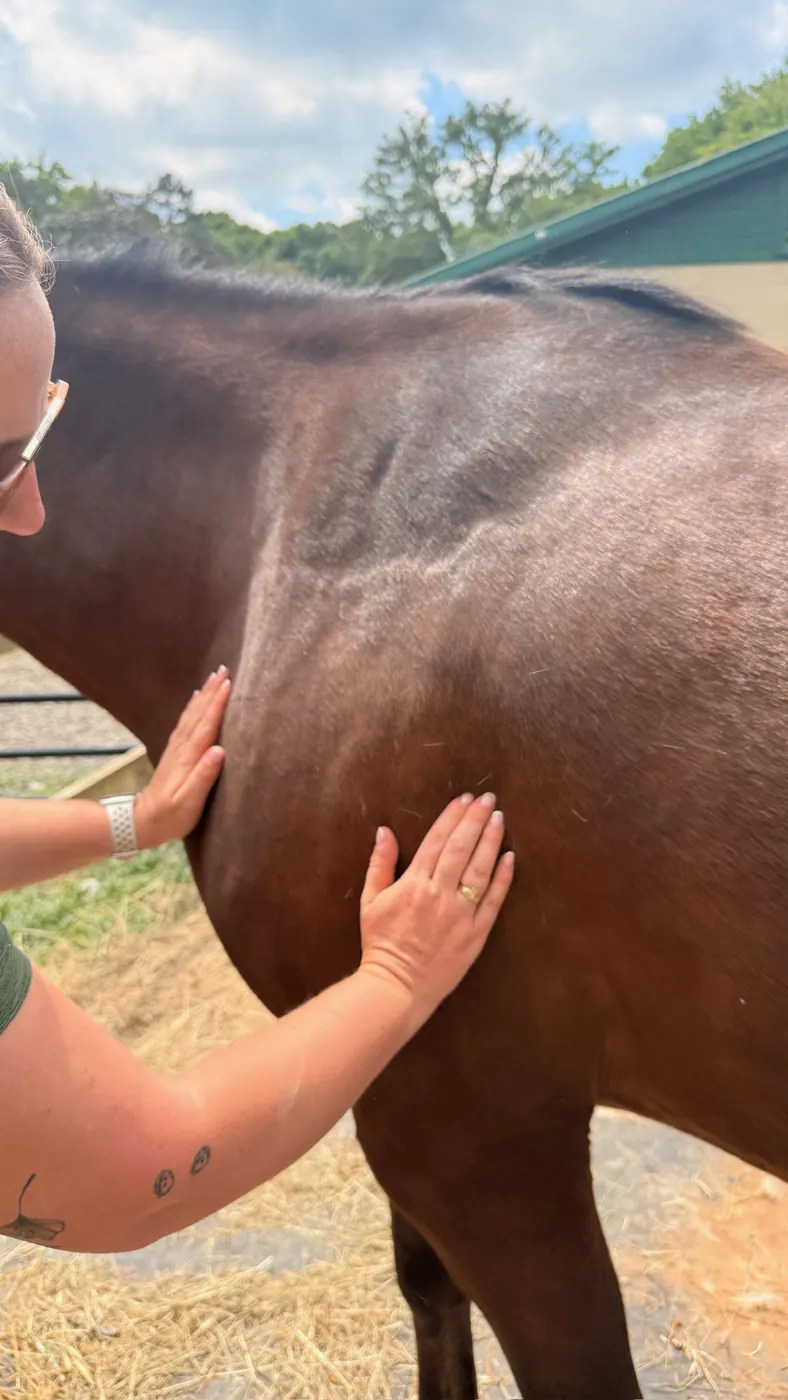
Fascia is everywhere
Fascia is a continuous sheet of connective tissue that wraps every muscle, bone, organ, and blood vessel in your horse's body. It holds things in place and, when it is healthy, lets everything slide and move freely. Each part of the body supports the other: fascia, muscle, bone, nerves, and organs all work as one connected network.
The leggings under jeans
Here is how I explain it. One winter I pulled a pair of leggings on under jeans that are normally comfortable and stretchy. With the extra layer, the friction between the fabrics shortened my step and made it harder to sit and bend. Nothing was wrong with the jeans. The layer underneath was grabbing.
That is what restricted fascia does. Healthy fascia glides. Restricted fascia grips, and the muscle underneath can't reach its full range even when nothing is wrong with the muscle itself.
Why a problem in one place shows up somewhere else
Because fascia is continuous, a restriction rarely stays put. An adhesion in the fascia over the gluteal muscles can affect the glutes themselves, but also the long back muscles (the longissimus dorsi and iliocostalis) and the hamstrings. Understanding those connections helps me map where your horse's discomfort is really coming from, instead of chasing the spot that hurts the most.
Conformation, fascia, or your vet?
Part of my job is sorting out what a finding actually is. Say a horse is noticeably short reaching forward with a front leg at the walk. Is that because of a steep slope to the shoulder, which is conformation and won't change? Is it fascial restriction and muscle tension, which bodywork can help? Or is it something outside my scope that belongs with your vet? I look at all three before I decide what to do, and I'll tell you which one I think it is.
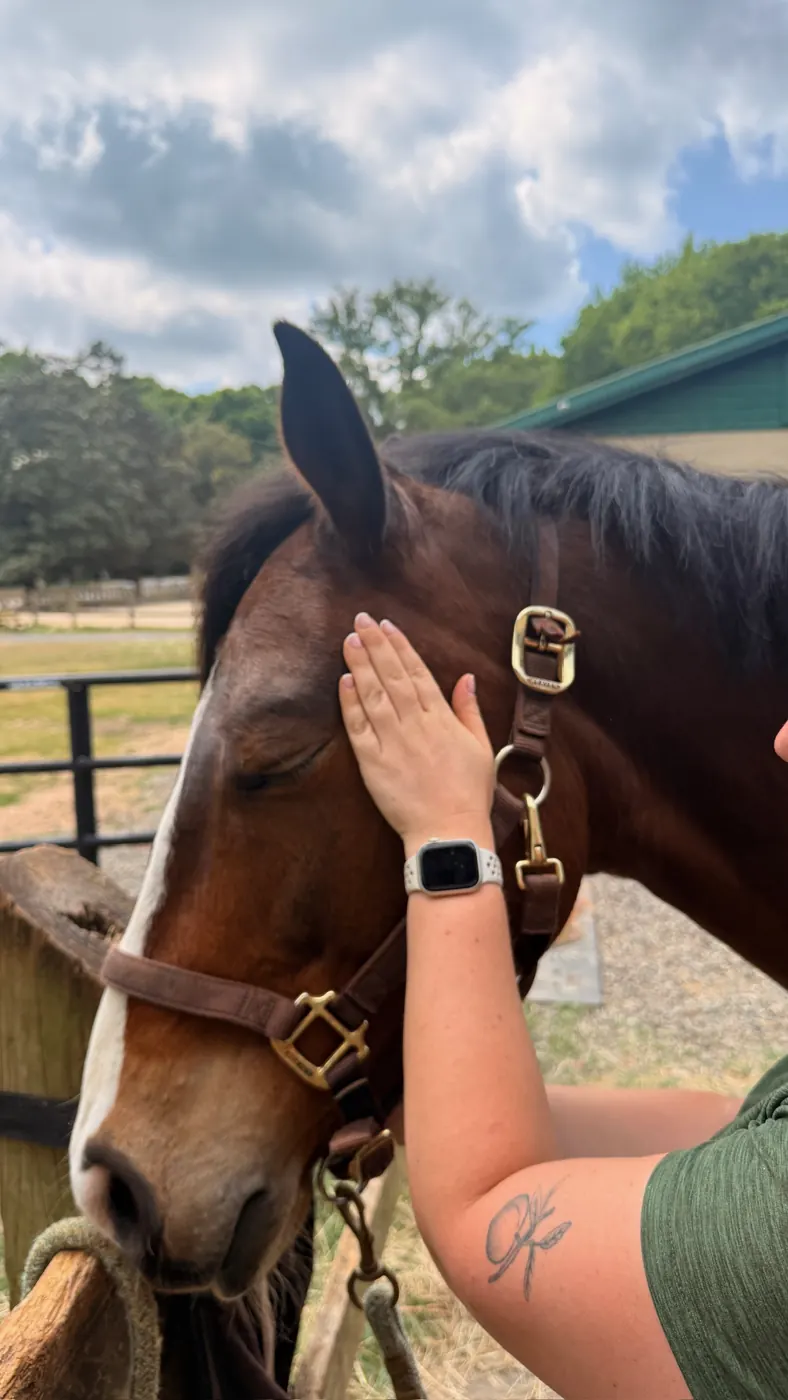
What myofascial release does in a session
MFR uses slow, sustained pressure to let restricted tissue release. A few things tend to happen when it does:
- Circulation opens up. Restricted fascia can press on the small blood vessels running through it. As it releases, you can sometimes feel warmth under my hands or see vessels become more visible.
- Fluid moves better. The lymphatic system has no pump of its own and relies on movement and muscle to clear fluid. That is part of why stalled horses stock up, and why releasing tight tissue can help things drain.
- The horse lets go. Good bodywork helps shift a horse out of "fight or flight" and into "rest and digest." You'll often see licking and chewing, yawning, a big breath, a lowered head, or a softer eye.
What it isn't
MFR is a tool that supports the body's systems. It isn't a diagnosis, it isn't a cure-all, and it never replaces your vet. If I find something that looks like it belongs with your vet, I'll say so.
Sources I lean on for this: Equine Science (Zoe Davies), How Your Horse Moves (Gillian Higgins), ABC of the Horse Atlas (P. Gronberg), and my Freely Forward Bodywork certification coursework.
Questions about your horse?
Tell me what you're noticing and I'll call or text within 24 hours.
Get in Touch