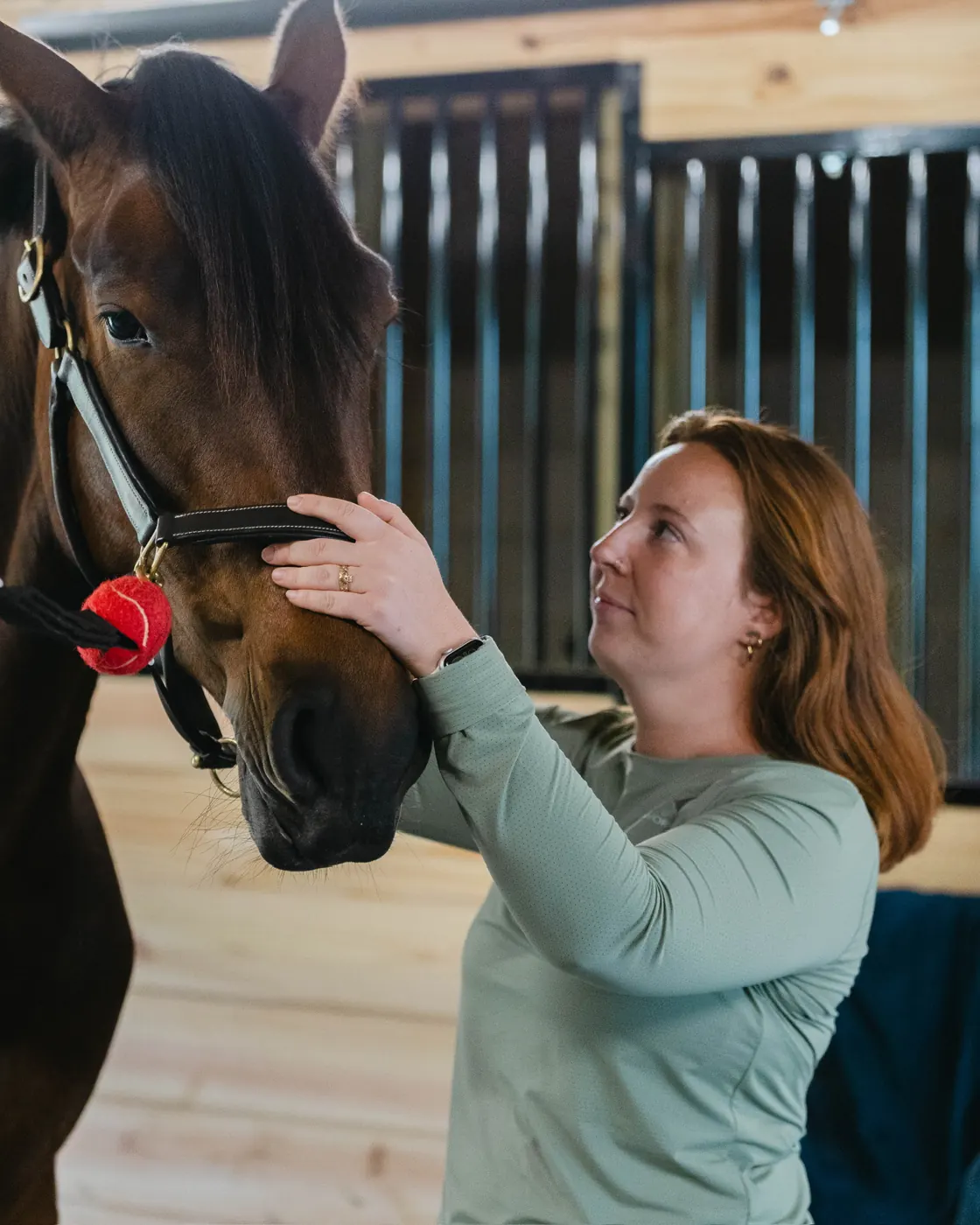
During the session
A horse that is letting go usually tells you. Watch for:
- Licking and chewing
- Yawning, sometimes a lot of it
- A big sigh or deep breath
- The head dropping and the eye going soft
- Muscles twitching or rippling as they release
That is the nervous system moving out of "fight or flight" and into "rest and digest." It is also why I like a quiet aisle and cross ties: a calm horse releases more.
The rest of the day
- Water. Make sure fresh water is easy to get to.
- No hard work for 24 hours. Skip the jump school or the long gallop. If I've suggested an easy walk or specific stretches, those are fine.
- Expect a sleepy horse. Many horses are quiet, even dozy, for the rest of the day.
What's normal the next day
Some horses feel a little stiff or tender the day after deeper work, a lot like you feel the day after a hard workout. That usually passes within a day or two. Many horses feel looser and more willing on the first ride back.
When to call your vet
Bodywork shouldn't cause heat, swelling, lameness, a fever, or colic signs. If you see any of those, call your vet first, then let me know. They don't come from a normal response, and they need a professional look.
What to tell me before next time
Your notes are some of the most useful information I get. Before the next visit, jot down:
- How the first ride or two felt: bend, leads, transitions, the things you flagged
- Anything that changed in the barn: grooming, saddling, girthing
- Changes in work, tack, shoeing, or turnout
Your written session notes from me arrive within twelve hours of the visit, with what I found, what I worked on, and what to watch for.
Bodywork and PEMF are complementary care. They support, but never replace, your veterinarian.
Questions about your horse?
Tell me what you're noticing and I'll call or text within 24 hours.
Get in Touch